Sam Sweeney Q&A
Q&A
Opera, pop punk, Nordic folk and a musician-turned WW1 soldier. Ahead of his anticipated return to Kings Place as part of Folk Weekend: The Stories We Carry, Sam Sweeney tells us all about the musical memories and unlikely influences behind his journey as a master of the English fiddle.
What’s your earliest musical memory?
I remember standing on a leather footstool, aged four, with a chopstick in my hand, watching The Proms and conducting the prelude from Bizet’s Carmen! Apparently, it’s a thing I did fairly regularly… there is footage! My first encounter with a violin was at a friend’s house when I was six years old. I was attracted to her violin because it was covered in glittery butterfly stickers. Her mum taught me ‘Twinkle Twinkle Little Star’ and I was hooked… I started having lessons straight away.
What influences (both musical and non-musical) do you carry in your writing and performances?
‘Music is the sole influence on my writing and playing and, as such, I always insist that I’m a musician, not an artist. I feel that artists can take influence from any number of sources in the world around them and use those sources to inspire their creations. I don’t do that. My only influences and inspirations are musical. I, like all musicians, am a product of every piece of music I’ve ever heard, and this thought is something I carry with me at all times, particularly as a traditional musician. It’s crucial that folk musicians are as rooted in the present as they are in the past.
‘There's as much Killers and Weezer in my last album as there is John Playford or Jinky Wells!’
‘I suppose there are two main strands to my influences. On one side, there’s the folk musicians from many cultures who weave magic from the threads of tradition. If I listen to traditional music, it’s usually American, Irish or Nordic, not English (despite my professional leanings!). At the moment, I’m really into Henriette Flach’s music – everyone should check her out.
On the other side is all the popular music I listen to. I’m a teenager of the mid-noughties, so the two huge genres in my life were Indie and Pop Punk. People don’t hear it, but my last album, Escape That, was a composition project that combined nostalgia and memory of the music of my teenage years with the format of the traditional dance tune. There’s as much Killers and Weezer in my last album as there is John Playford or Jinky Wells!’
Made in the Great War was a project that connected you on quite a material level to the histories of your craft as a musician. Nearly 12 years on, how does that experience still resonate?
‘The impact of that project and its story never ceases to amaze me. For those who don’t know the story, I bought a fiddle from Roger Claridge in Oxford about fifteen years ago. The fiddle was brand new, and Roger had just finished making it. On getting the fiddle home and looking inside the F hole, there was a maker’s certificate that said ‘Richard S Howard, Leeds, 1915’ and a sticker that read ‘Made In The Great War’. My father did some research into this man, and it turns out that Richard Howard, a music hall performer from Leeds, carved the violin’s pieces in 1915, joined the army, and was sadly killed in Flanders in 1917, leaving the violin unfinished. The pieces of it were found in a paper envelope at a car boot sale in Manchester, nearly 90 years later and given to Roger Claridge, who finished it. I, knowing nothing of its journey, fell in love with it, and the story inspired a theatre production called Made In The Great War and an album of First World War music called The Unfinished Violin.
‘That violin coming into my life changed everything for me. Until we created Made In The Great War, I was a sideman, always accompanying others and being in the background of every band I was in. Something about this extraordinary instrument and the need to tell its story gave me the confidence to actually begin creating my own music and put my name to things. I have been to Belgium twice to play the fiddle at Richard’s grave. I’ve met Richard’s descendants, who knew nothing about him. People from all over the world heard about the violin’s story, and it continues to astonish me. In reality, I am extremely indebted to that violin. Who knows what I’d be doing now without it?’
‘Tradition is an important word to me, mostly because it gives you a sense of being part of something larger than yourself. ’
What other roles do history, legacy and tradition play in your music? What’s your relationship with those words?
‘I certainly like to imagine that traditional music in England must have been brilliant at one stage, otherwise so much of it wouldn’t have been written down to preserve it. History and historical accuracy don’t particularly appear on my radar, but legacy and tradition certainly do.
The legacy of those who played this music when it was popular is the dots to thousands of tunes, written in old, dusty manuscript books or in published collections. Given the scant evidence we have on how this music was played, I feel as though part of my job is to try to leave a bit of a legacy of English fiddle music being played in an exciting and inspiring way, so that people may continue to develop the style long after I’m gone. I do a huge amount of teaching now, and I feel that passing on my experience and knowledge in an educational setting is as important as putting out records and playing gigs.
‘Tradition is an important word to me, mostly because it gives you a sense of being part of something larger than yourself. As a player of traditional music, I always have a team of past fiddle players encouraging me from beyond this realm… it really takes the pressure off. Chris Wood once said to me, “tradition must be respected, and convention can be broken, but only when you know the difference!” Whoever said that first is a very wise human.’
What are some of the musical lives you’ve lived before finding your current style/identify as an artist?
‘Other than playing drums in indie bands at school, I’ve never really had a musical life beyond traditional music. For me, trying to figure out playing English traditional music on the fiddle is more than a life’s work, so I’m pretty single-minded in focusing on that, albeit through different line-ups and projects. While I enjoy playing music from other traditions at home, I’d never attempt to play Irish, Swedish or French music as part of my job. I think you have to be saturated in a country’s culture to be able to play its traditional music properly, hence focusing on English sources.
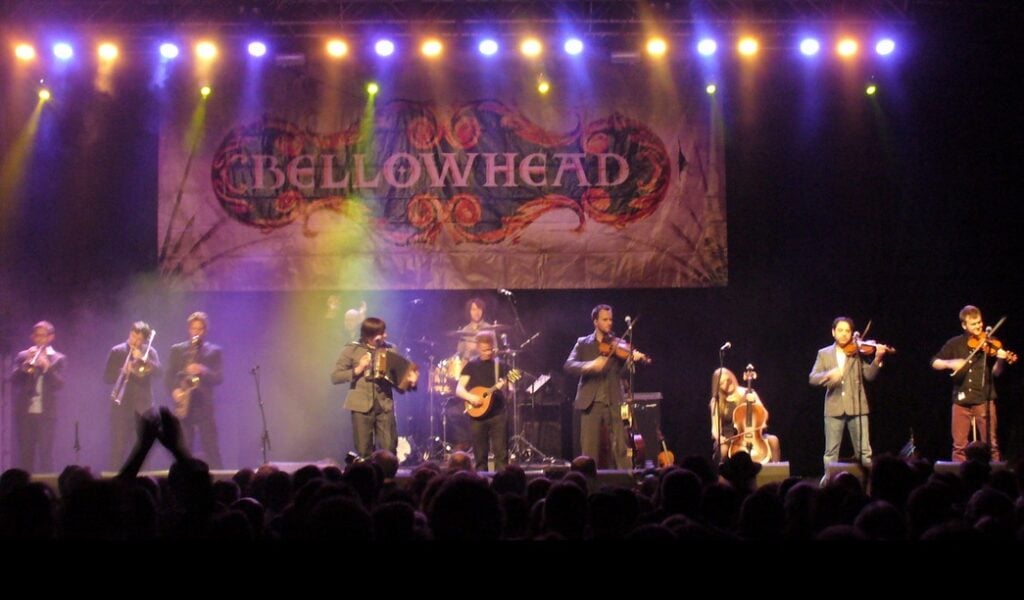
‘Of course, Bellowhead, while having English traditional music at its heart, experiments with other genres in a pastiche sort of way. I’m a great believer in pastiche, as opposed to fusion or parody, by the way!
I think if I had my time again, I would want to be a drummer in a pop punk band, but I’m about ten years too young for that to have been a career path!’
‘There were tears on stage and off!’
What memories have you collected at Kings Place over the years?
‘Kings Place Hall 1 was the first gig back after the pandemic for me. I launched my album Unearth Repeat to two socially distanced audiences there, one matinee and one evening performance, and I remember it being a profoundly emotional experience. Launching an album is an emotional rollercoaster at any time. You put your heart and soul into a record and then make it public, waiting to see how people react.
‘Because of the lockdown periods, I already knew that a lot of people had a deep emotional connection to Unearth Repeat. Countless people messaged me to say the album had got them through these periods of isolation, which meant a huge amount to me. To finally perform that record to real people in such a gorgeous venue and acoustic was a profound experience. There were tears on stage and off!’
What do you hope audiences will take away from your Folk Weekend performance?
‘This tour is the last time I’ll be playing my own repertoire for a while. I have new projects to focus on over the next few years, including launching my new fiddle duo with Grace Smith later this year. My Folk Weekend performance will revisit some of my favourite tunes across my three albums and two EPs, so there’ll be First World War tunes, traditional dance and Morris tunes, some of my own compositions and a few of the more abstract re-imaginings of tunes from Shapes.
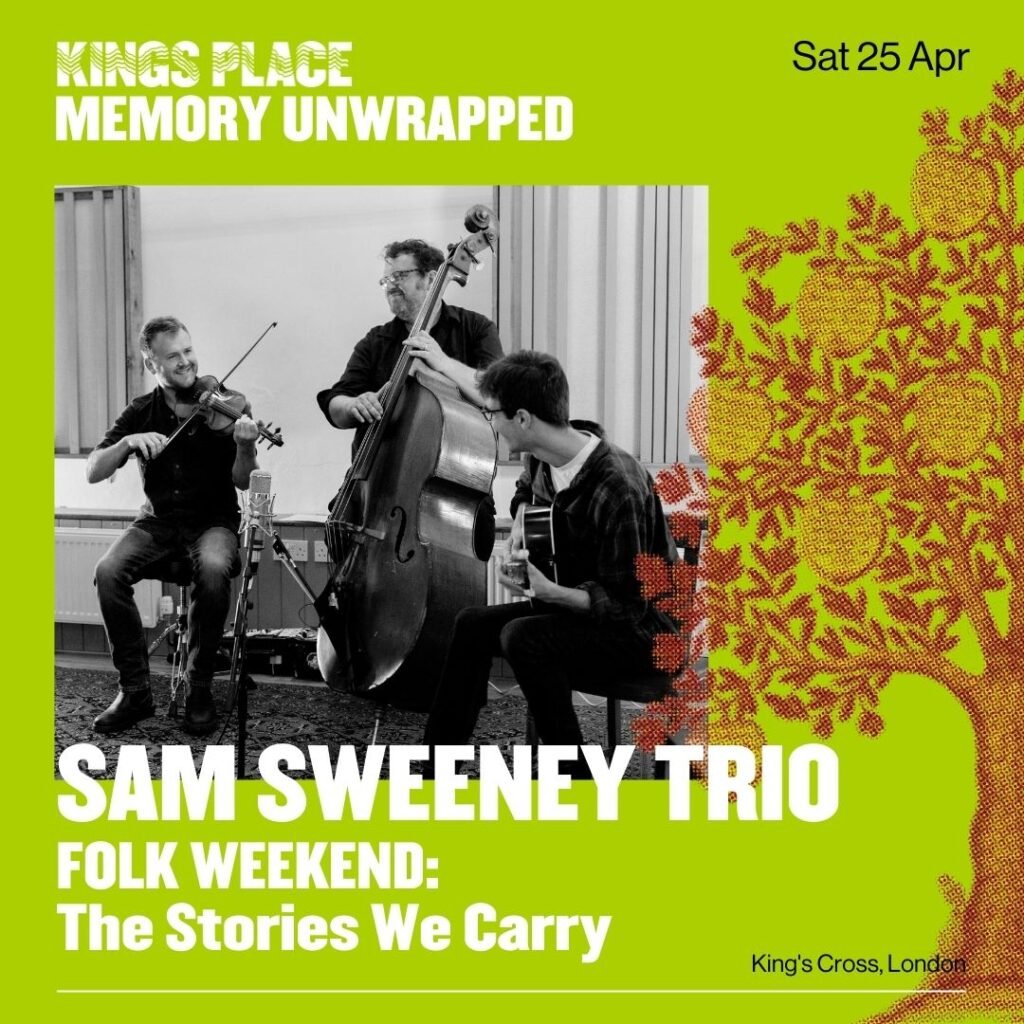
‘The great thing about creating my own music is that I only play things that make me feel something, so my hope is that audiences go away having felt something wonderful. People often cry at my gigs, which I take as a compliment! I’m an informal performer, there’s no ‘show-biz’, no pyrotechnics. There’ll be profound bits, sad bits, extremely joyful bits, dancy bits… music is emotion and that’s always my motive when putting on a performance – making people feel something!’