Graham Fitkin: Treeline Q&A
Interview
Maverick composer Graham Fitkin has just set off on a pan-European forest-focused 2500-mile cycle tour from Romania back to the UK. This July, the ‘Treeline’ project culminates in a final concert at Kings Place.
Before he embarked on this remarkable journey of discovery and sound, we caught up with Graham to understand more about the complex ambitions, technologies and collaborations behind the project.
In preparation for the Treeline album and tour, Graham has worked with communities from the Carpathian Mountains to Epping Forest, collecting data and sounds from specific trees which are woven into an extraordinary work for piano and keyscanner.
Local community partners in the Treeline locations have created profiles of their chosen tree to contribute to the project. Have any particular stories surprised you?
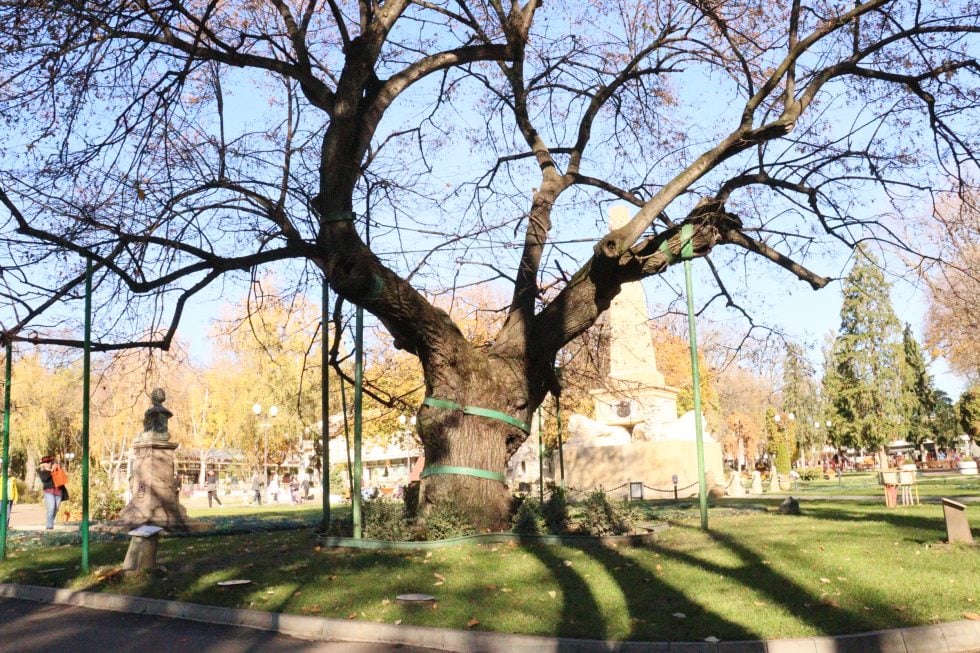
‘There’s been a really interesting mix of stories and anecdotes alongside more scientific measurements and data from so many of them. Many trees have been rooted in a community for centuries and there are lots of individual stories, like the 540-year-old Linden tree in Romania’s Iasi Copou Park. It was first deemed to be a lucky tree, having been preserved from a massive development plan in 1833 when most of the forest it was part of was chopped down. But then, when the area became a Second World War prisoner-of-war camp by the Soviet army, all its neighbouring trees were felled, but it stoically remained.’
‘the ability to actually connect with the environment [...] takes time and effort and using one’s senses, not just vision, but everything is imperative.’
‘Then, in 1950, a storm broke the main trunk in two and devastated many branches. The national poet Emenescu wrote many poems under its branches about it. It continued to survive, though and in 2013, when newer development plans were going to chop it down once more, student protests saved it. It is now an emblem of fortitude in an ever-changing world, and has started regrowing again from inside its split trunk! But as I say, this is just one example, and there are many.’
Epping Forest is our local spot on the Treeline map. Can you tell us about your partnership there?
‘The Epping Forest Charity has been central to the project. The forest there is over 10,000 years old, has been forested since Neolithic times, and has over 50,000 ancient trees, including many beech trees. Although it has been ‘managed’ in some form for many centuries now, Beech trees have been an important part of the forest there. And beech trees have been an important climax species of tree throughout Europe for millennia and governed some of the route that Treeline takes.’
‘I will be taking recordings on route, both ambient and intra-tree, which will become site-specific parts of each performance.’
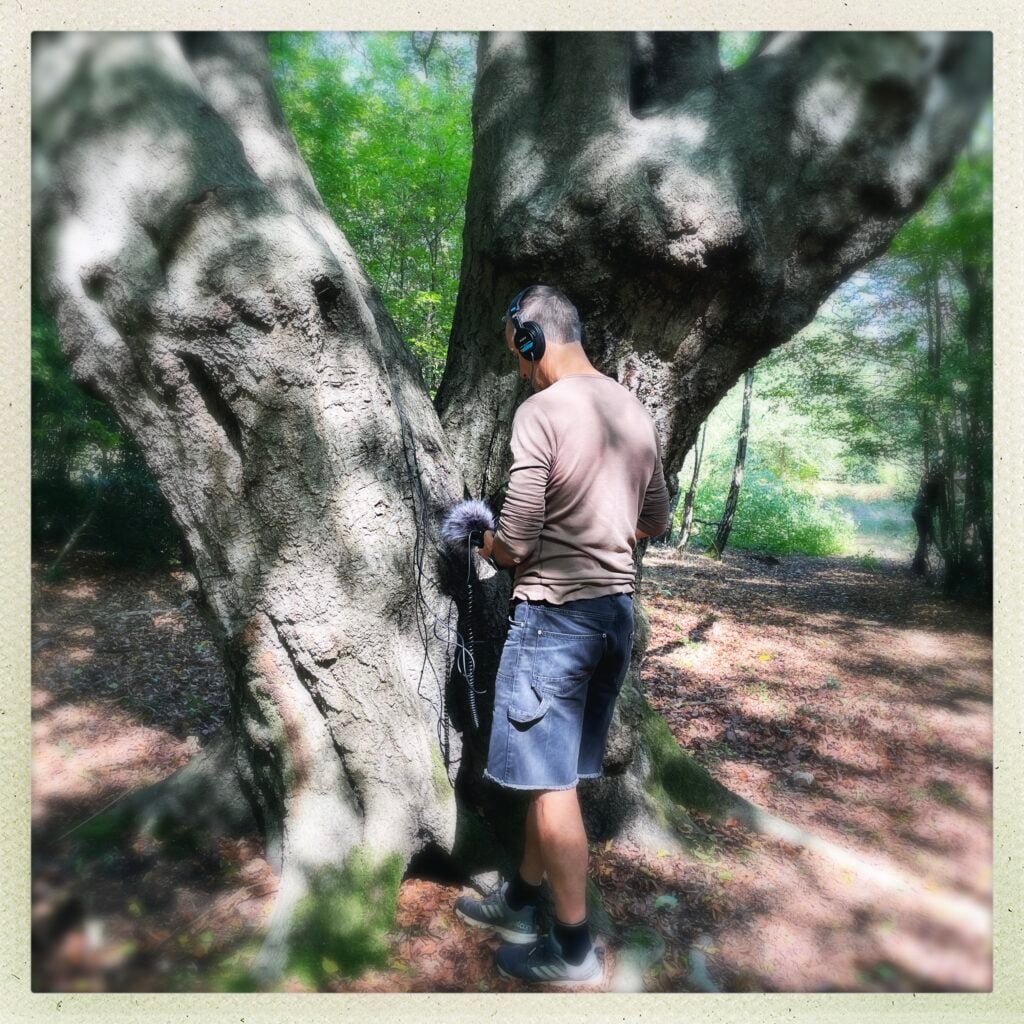
‘I have worked with and continue to work with community groups in Epping Forest – Youth Conservation Volunteers, Youth District Council, Epping Forest Photographers – and we have taken recordings from a particular beech tree there which have been embedded into the Treeline music. Epping Forest Charity has been a co-producer in the project, and they’re a super bunch of people doing really valuable work.’
Is there a particular tree that has had a significant impact on your own life?
‘For me, growing up in Cornwall, where trees are not abundant (due to agriculture, wind and salt), I loved the sound of the dozen or so Elm trees which surrounded the house where I grew up. They were tall, extremely bendy and caught the wind as we were on top of a hill. I would go to sleep listening to them, and they were a significant feeder of my young imagination at the time. I also made dens in them, generally spent time hiding out there and even recorded birds there on an old cassette recorder that my Dad gave me. And then they all died from Elm disease. This was a major shock to me, and I found it incredibly sad. So they were definitely a significant factor in my young life.’
Why have you chosen to cycle the route of the tour?
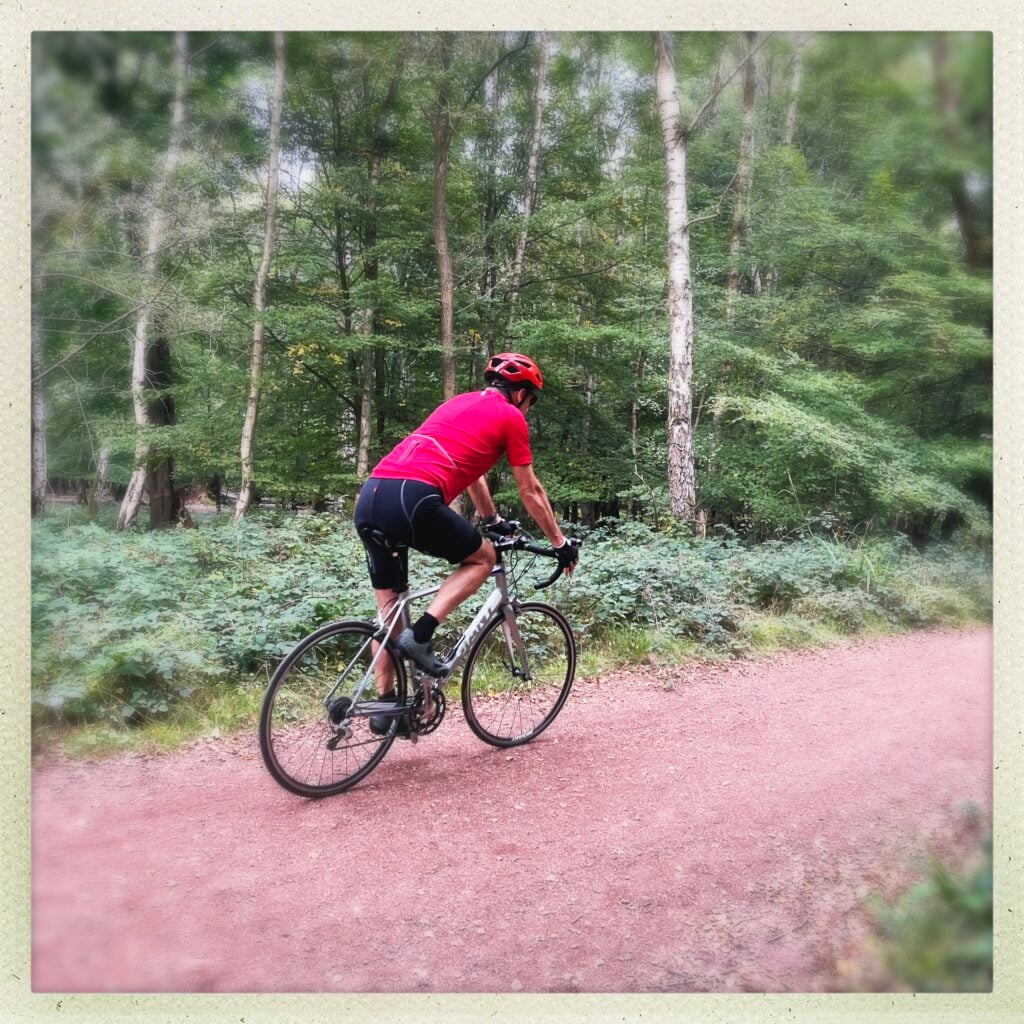
‘Firstly, cycling has a pace to it, it’s not too fast, not too slow and allows enough time to interact with an environment as you pass through it. We can often speed through places with only the destination in mind, but cycling allows the time to connect with places that you pass through.
‘The second thing is that you’re not in a tin box, insulated from the outside and funnelled onto large roads. I can travel on paths, small roads and tracks. I can smell the environment I pass through, hear it, connect with it and work out why trees are in one place but not in another, how they’re shaped by the wind, why there aren’t any trees in places…’
‘Hall One is a stunning hall, and the wooden aspect is most fitting too.’
‘Finally, I will be taking recordings on route, both ambient and intra-tree, which will become site-specific parts of each performance and cycling allows me to carry enough kit to do that and the liberty to stop when I notice somewhere that needs a little memento.’
© Ruth Wall
Why is music a useful way to appreciate biodiversity?
‘I’d say that biodiversity can take time to appreciate. And working out why it’s a useful thing also takes time. Of course, I can say that forests are brilliant because they sequester carbon, pump out oxygen, change microclimates, reverse soil erosion, mitigate flooding, filter water and provide other benefits, but I see the ability to actually connect with the environment as something that takes time and effort and using one’s senses, not just vision, but everything is imperative. Time and sound are crucial to that.’
Can you tell us about the ‘forest instrument’ you’ve created? What are the technical aspects that bring the album and the performance to life?
‘So, there are many, many recordings that people and I throughout Europe have made for Treeline, which are used in the music. But I wanted to play an acoustic piano, not a sampler, not a synthesiser this time. So I wanted the notes on a real acoustic piano to be able to trigger some of these forest sounds without me. How to do that? Andrew McPherson from the Augmented Instruments Lab at Imperial College has been dealing with this sort of thing for a while and built some incredible instruments like the Magnetic Resonance Piano.
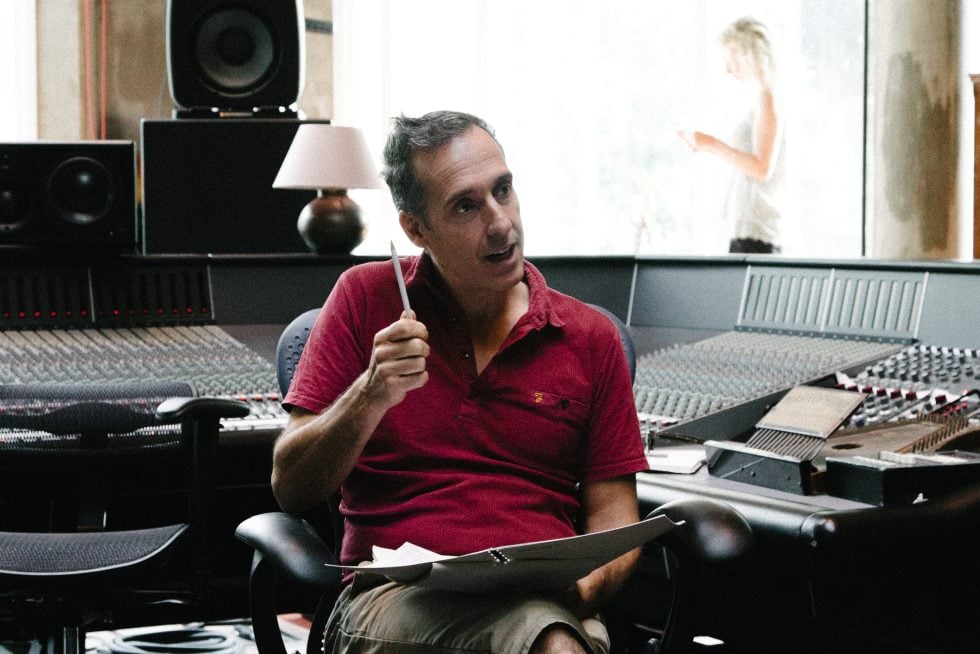
‘But that was not practical to take on a tour, but his Keyscanner was. These are not in commercial production, but Andrew built me one, and it sits above the piano keys and has light sensors for each note of the piano. It senses when I depress a specific note, how I depress the note, the length and velocity and then through Midi will trigger whatever I have programmed it to do.
‘This may be simply a skylark from Belgium on a C#, or the traffic surrounding a Czech oak tree on an E, or it can allow me to loop things and live record. In parts of the piece you hear only solo piano, but in other parts you might hear forest sounds from Bielsko-Biala, farm sounds from Czech Republic, frogs from Slovakia.’
What does it mean to be finishing the Treeline tour here at Kings Place, in Hall One?
‘I have played at Kings Place many times in a variety of guises – solo, with other groups (Sacconi Quartet, Will Gregory Moogs), with Fitkin Wall (with harpist and partner Ruth Wall) and also with my band. I curated a series many years ago, too, called The Multiplier – for groups of homogenous-sounding instruments (20 guitars, 2 harpsichords, 4 marimbas, 2 cardboard boxes).
‘I think it shows I like being at Kings Place, and because of this history, it’s the perfect place to complete a tour which travels to many places that I’ve never performed at before. Hall One is a stunning hall, and the wooden aspect is most fitting too.’
From 18 May, you can track Graham on his cycle tour across Europe at this link.
Follow the link below to book tickets for the final concert at Kings Place.